IVF Possibilities after Uterine Septum Surgery
Although the true prevalence of uterine septa is unknown, a practice committee guideline from the American Society for Reproductive Medicine (ASRM) estimates their prevalence at about 0.1-1.5 percent. Septa are often discovered during fertility workups, and they are more common among infertility patients. However, there is insufficient evidence to identify septa as the sole cause of infertility.
Uterine septa exist on a spectrum, ranging from a partial or incomplete septate uterus to a complete septate uterus. Where a patient falls on this spectrum determines whether or not uterine septum surgery would improve their pregnancy and live birth prognosis.
Types of Septa
Magnetic resonance imaging (MRI) and biopsy specimens now suggest that septa are composed mainly of muscle fibers — not of fibrous tissue, as clinicians in the field originally thought.
There is no global standard for defining a uterine septum. A study published in Ultrasound in Obstetrics and Gynaecology examined the guidelines put forth by ASRM and the European Society for Human Reproduction and Embryology (ESHRE) as well as a published consensus known as the Congenital Uterine Malformation by Experts. Researchers found that differences in definition could lead to a higher or lower incidence of corrective uterine septum surgery.
ESHRE guidelines include a sepate uterus under the organization's general guidance for uterine malformations, divided into "complete" and "partial" cases. The American Society for Reproductive Medicine's practice committee suggests the following classifications:
Diagnosing a Septate Uterus
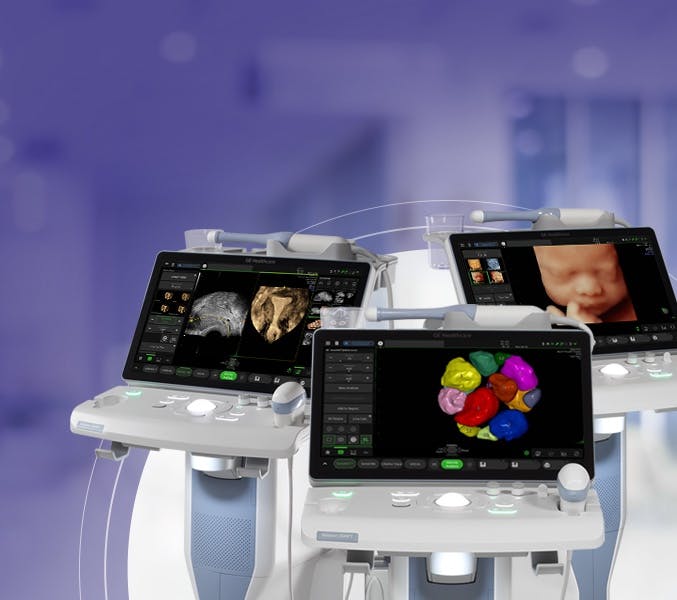
Historically, diagnosis required laparoscopy and hysteroscopy to directly visualize the exterior and interior of the uterus. However, a study published in the Journal of Minimally Invasive Gynecology suggests 100 percent accuracy when using 3D ultrasonography combined with saline infusion. Another study, published in the Journal of Ultrasound in Medicine, found this method to be 88 percent accurate.
Overall, minimally-invasive septate uterus ultrasound, sonohysterography and magnetic resonance imaging (MRI) are effective diagnostic tests for distinguishing between a septate and bicornuate uterus.
Clinical Pregnancy and Live Birth Rates
There is no global consensus about whether or not corrective surgery leads to improved clinical pregnancy and live birth rates. Unfortunately, the length and width of a septum prior to surgery does not provide sufficient evidence of improved obstetric outcomes.
The largest study to date, published in Archives of Gynecology and Obstetrics, was a retrospective case series of 361 patients with a septate uterus (including partial, complete and duplicated cervices).
The miscarriage rate decreased from 91.8 percent to 10.4 percent following uterine septum surgery, and the live birth rate increased from 4.3 percent to 81.3. For women with a history of recurrent pregnancy loss, the miscarriage rate decreased from 94.3 percent to 16.4 percent, and the live birth rate increased to 75 percent from 2.4 percent.
Smaller but more recent studies show similar statistically significant findings, although not as large as those of the previous study. However, other studies — such as one published in Facts, Views and Vision and another from Human Reproduction — show no difference in clinic pregnancy or live birth rates between those who have and have not had uterine septum surgery.
Time Between Correction and Conception
As with other questions surrounding the septate uterus, the ideal time between surgery and attempting pregnancy has not been sufficiently studied. Available evidence suggests the uterine cavity heals in approximately two months, but physicians should practice caution when making a specific recommendation around timing.
Many studies, including those published in Fertility Research and Practice and BMC Women's Health, conclude that artificial reproductive technologies such as in vitro fertilization (IVF) outcomes do not improve after uterine septum surgery; patients are just as likely to experience spontaneous pregnancy and go on to have a live birth.
Uterine septate surgery is also occasionally not a single-step process. For instance, in a study from Medicine examining 121 people with complete or partial uterine septa, four patients experienced residual uterine septa after surgery, while six developed uterine adhesions. Three patients with residual uterine septa were able to carry a pregnancy to term. Two of the group with adhesions achieved a full-term pregnancy after further surgery to remove the adhesions.
Because septa are not thought to be the sole cause of a patient's infertility, physicians should review the potential risks and benefits of uterine septum surgery prior to proceeding. Until more evidence is available, expectant management paired with ultrasound may prove the best choice.